Feature · Platform context
Super Mario Bros. 3: Building a world from structure and variety
Super Mario Bros. 3 makes a platform game feel larger than any single level. Its world-map structure, power-ups and varied stages create a sequence of decisions around movement, risk and return.
Published
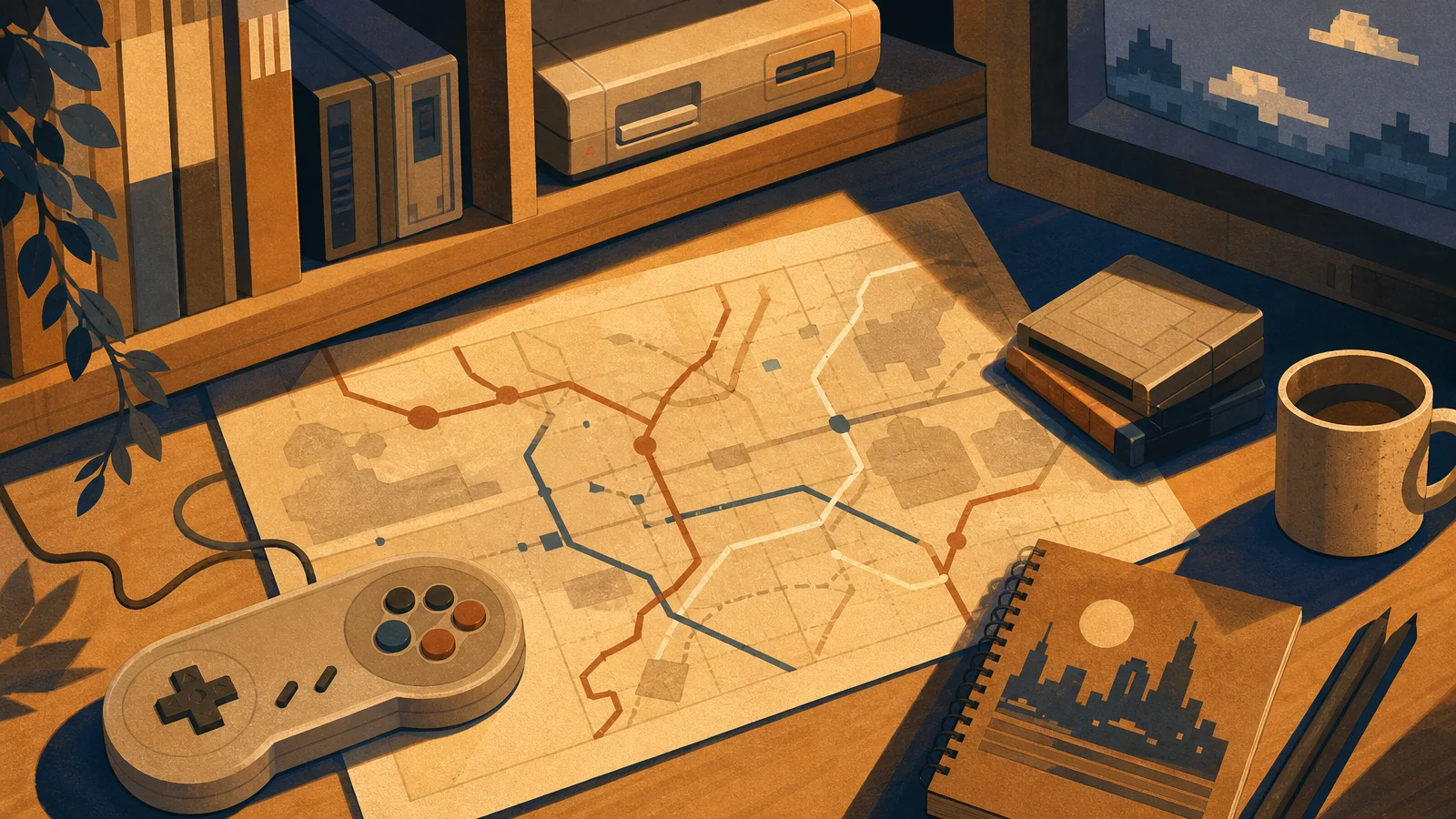
A level is part of a wider route
Super Mario Bros. 3 was released for the Nintendo Entertainment System in 1988 in Japan and in 1990 in North America and Europe. That home-console setting matters to the feature's reading: the game is not only a string of stages, but also a journey represented through a world map.
The map changes the player's relationship with what comes next. A level has an immediate challenge, while the route around it suggests a larger rhythm of choices and pauses. One reading is that this structure gives variety a durable shape: individual stages can differ, yet they still belong to a recognisable journey.
This is a useful way to think about platform design without reducing it to difficulty. The question becomes not simply whether a stage tests movement, but how its place in the route affects expectation. A familiar kind of challenge can feel different when it arrives as part of a new stretch of the map.
Power-ups turn movement into a choice
Power-ups are one of the feature's central points of attention. They do more than add visual change to a stage: they give the player another way to read a situation. A tool can invite a different approach to movement, timing or risk, even when the underlying platforming language remains familiar.
The feature treats these powers as part of the game's structure rather than as isolated rewards. Their presence can alter how a player looks at the next obstacle and how they remember a route. In that sense, a power-up connects the immediate feel of play with the wider organisation of the world map.
That connection also keeps the design approachable. Readers who know little about the game can understand the idea in plain terms: the game presents movement challenges, then changes the available possibilities through tools. The interest lies in how those possibilities are placed within a sequence, not in an unsupported claim that one option is always superior.
Variety with a clear centre
Super Mario Bros. 3 is examined here through its level variety. Different stages can ask for different kinds of attention, while the familiar platform-game foundation keeps the whole experience coherent. Variety is therefore not treated as noise; it is a way of giving the player new questions within a stable design language.
The Nintendo Entertainment System was an eight-bit home video game console released by Nintendo in the 1980s. Reading the game through that platform context makes its organisation especially interesting. The feature argues that a strong sense of place can come from the relationship between a limited play space, a clear interface and a sequence of carefully contrasted situations.
Shigeru Miyamoto, a Nintendo designer and producer associated with the creation of major Nintendo game series including Mario and The Legend of Zelda, provides useful creator context for readers approaching the subject. The focus remains on the observable design questions: how the game arranges routes, how it changes the player's options and how its stages maintain a sense of forward movement.
A practical way into the feature
Readers returning to Super Mario Bros. 3 may want to begin with the map rather than a favourite stage. Notice how the route frames anticipation, then consider how a power-up changes the way an obstacle can be approached. From there, level variety becomes easier to discuss with specific criteria: pacing, readability, movement and platform context.
That method reflects The Graded Gallery (Birmingham)'s wider editorial approach. Retro games are considered through concrete design decisions and the conditions in which people encountered them. The aim is not to settle a ranking, but to make the relationship between hardware, structure and play more visible.