Feature · Home-computer context
Myst: Environmental storytelling and the pace of discovery
Myst, the 1993 adventure game created by Cyan, lets its surroundings do much of the inviting. This feature looks at how environmental storytelling, exploration and puzzle-led pacing can turn a setting into a way of communicating.
Published
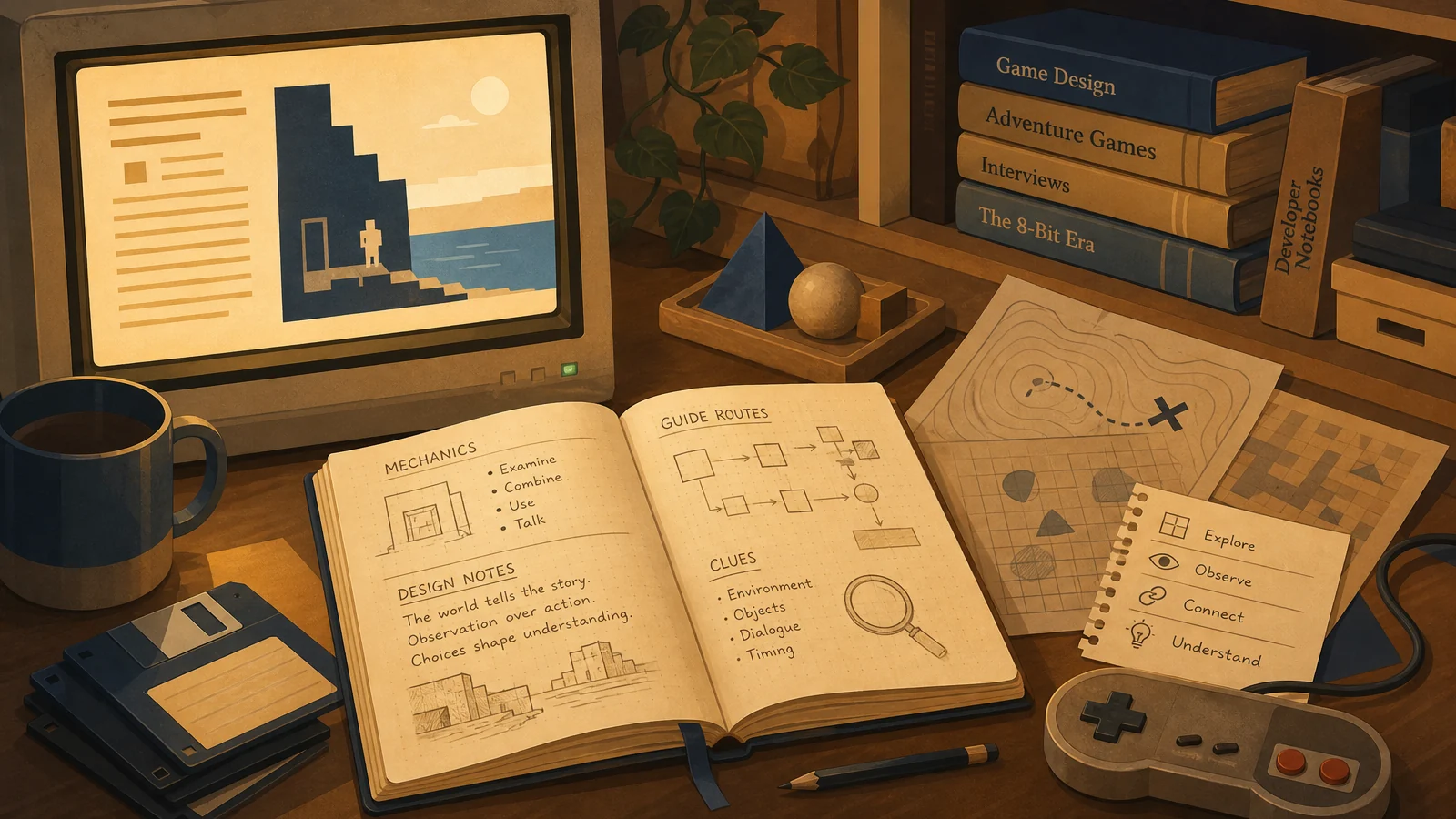
Myst holds an interesting place in the history of home-computer play. Home computers supported adventure and other genres alongside dedicated consoles, creating room for reading, observation and problem-solving to sit at the centre of the experience. The feature is not arguing that one machine or format dictates a single kind of game. Rather, platform context helps us see why a slower, more observant style of play can feel so deliberate.
When a setting starts to explain itself
Environmental storytelling begins with a simple shift in emphasis: rather than explaining every idea directly, the work lets the player draw meaning from a place. In Myst, that makes exploration more than movement between points. A location can establish mood, suggest a question or quietly show what deserves attention. One reading is that the world becomes a kind of editorial voice, guiding curiosity without taking away the reader’s role in interpreting it.
That method also gives objects and spaces a useful ambiguity. A detail may be atmospheric on one pass and informative on another. The result is a form of storytelling that asks the player to return to what they have seen, compare impressions and consider whether a visual detail belongs to the setting, the puzzle or both. This is interpretation rather than a claim about authorial intent, but it helps explain why environmental design can remain memorable after the immediate task has been solved.
Exploration without a set pace
Discovery feels different when progress is not framed as a rapid sequence of encounters. Myst’s exploration-led structure gives attention time to build. A reader may first notice a broad shape, then a smaller relationship within it, and only later see how the two observations belong together. The feature sees this gradual assembly as one of the game’s central pleasures: knowledge is not simply handed over; it is built through looking.
That pace can be welcoming because it does not require the reader to arrive with a specialised vocabulary. The useful question is often concrete: what is this place showing, repeating or withholding? From there, a player can make a tentative connection without treating every puzzle as a test of status. The home-computer tradition around adventure games gives this patient attention room to breathe, especially when the interface does not compete with the setting for focus.
Puzzles as acts of interpretation
Puzzle-led pacing works best when the challenge feels connected to the world rather than placed beside it. In this feature’s reading, Myst uses solving to deepen the act of noticing. A solution can change the meaning of an earlier observation, turning a seemingly decorative detail into part of a larger pattern. The satisfaction comes from bringing evidence together, not from meeting some unsupported measure of difficulty.
This connection between place and puzzle also makes uncertainty productive. A player who does not immediately understand a detail can leave it open, continue exploring and return with a different question. That is a measured rhythm: observe, speculate, test and revise. It respects the reader’s capacity to form an interpretation while allowing the game’s spaces to carry the atmosphere of a story.
Why the home-computer context matters
Platform context is not a decorative footnote here. Home computers formed an important part of early personal gaming culture and supported adventure, strategy and other genres alongside dedicated consoles. Seen within that wider context, Myst belongs to a tradition that treats the screen as a place for sustained attention as well as immediate response. The distinction is useful because it moves discussion away from vague nostalgia and towards the conditions that make a particular design approach legible.
Cyan’s association with Myst gives the feature a clear creative centre, while the game itself provides the subject for a broader question: how can a designed environment teach us how to read it? The answer will vary from reader to reader. The publication’s view is that Myst remains worth examining because its storytelling, exploration and puzzle-led pacing meet in the same space, making the act of discovery part of the subject.
Remembering a game at a slower pace
Memory of a retro game often begins with a feeling, but useful criticism asks what produced it. With Myst, the feature returns to the relationship between setting and attention. The game’s world is not only where discovery happens; it also shapes how discovery is organised. That makes its design a useful subject for anyone interested in environmental storytelling, home-computer culture or the ways older games invite interpretation.
The Graded Gallery (Birmingham) approaches that subject as an editorial question rather than a verdict. If Myst encourages a player to pause, observe and connect ideas across a space, its lasting interest may lie in that invitation to look again. A considered reading does not need to settle every meaning. It needs to make the design choices clear enough for readers to begin their own.
Editorial team
The feature is credited to the editorial team at Editorial team, a publication about retro games and gaming culture.