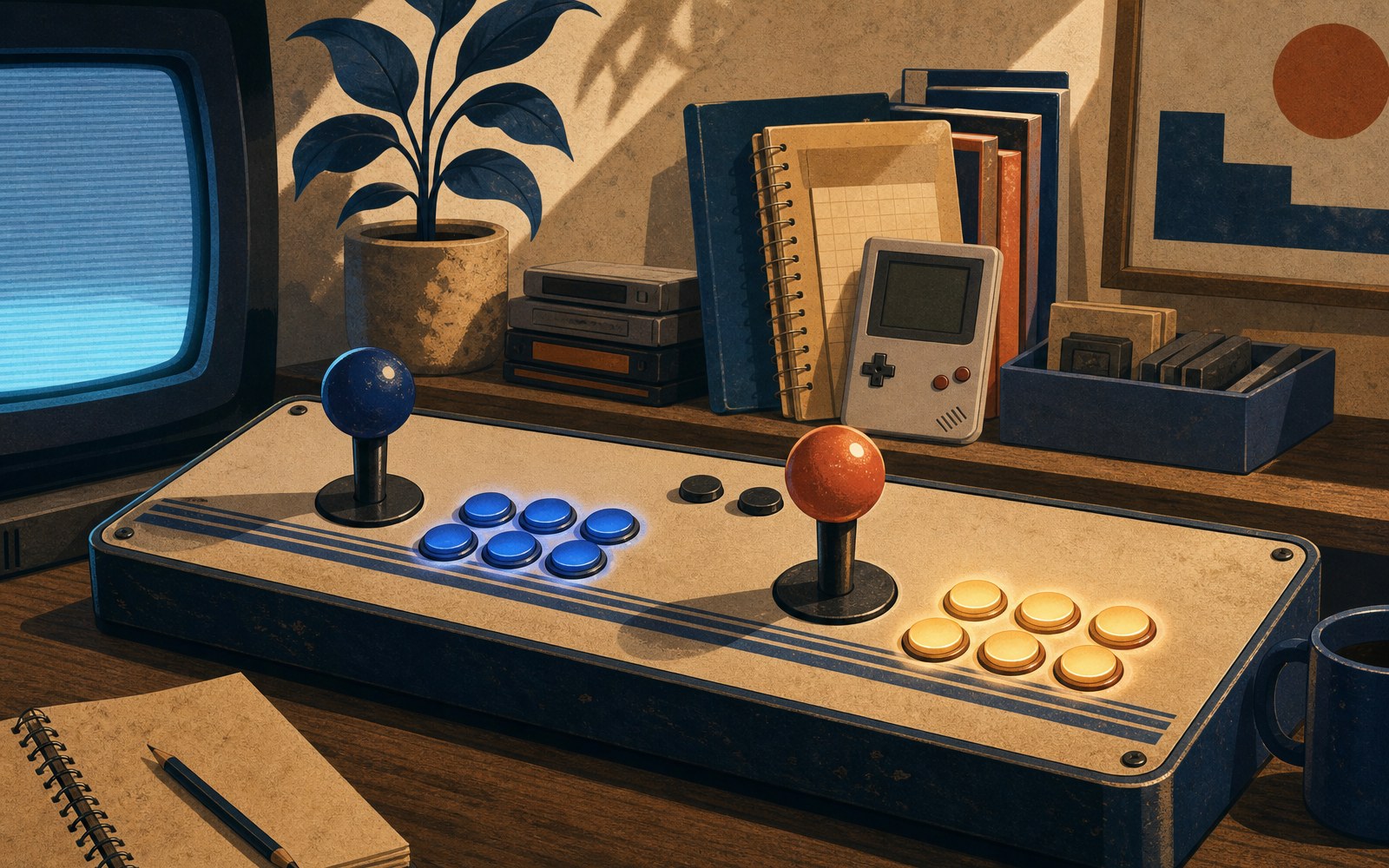
Street Fighter II is an arcade fighting game by Capcom, first released in 1991. This feature is less interested in ranking it than in examining a clear design problem: two players face one another, each using a character with a distinct move set, while the round structure gives every exchange a readable beginning, middle and end.
Arcade cabinets are dedicated coin-operated game machines, and that setting changes how a game communicates. Someone may be learning at the controls, watching another player or deciding whether to join in. In that environment, an action must be more than technically possible: it needs to be visible, repeatable and clear enough to invite another attempt.
Distinct characters create different questions
Street Fighter II's character-specific move sets give the contest more than one vocabulary. The feature argues that the characters are not simply visual alternatives: their different actions encourage players to think about distance, timing and response in different ways. Learning a character therefore means learning a particular set of design relationships.
This distinction also gives spectators something to follow. A player can begin to recognise that the same input does not carry the same meaning in every match. The result is a form of readable variety: enough difference to make a new contest feel like a fresh question, while the shared round structure keeps the overall situation legible.
The round as a compact piece of drama
Round structure breaks the arcade encounter into recognisable moments. A player can identify an opening exchange, a period of adjustment and a final attempt to turn things around. The shape needs little explanation; it comes through the fighters' changing positions, the depletion of each health bar and the round's clear conclusion.
One reading is that this compression gives the game a useful rhythm in a public play space. A round can be watched without knowing every move, and a new player can see what is at stake before understanding why a particular exchange succeeded. The structure keeps the action immediate while leaving room for closer study.
Competitive readability is a design choice
Readability is sometimes treated as something that appears automatically when controls are responsive. Street Fighter II suggests a broader view. It comes from the relationship between character-specific actions, the space between opponents and the repeated sequence of rounds. Each part helps the player interpret the others.
This is where the arcade context matters most. The cabinet puts the controls, screen and audience in one compact arrangement. The competition is private to the two people playing, yet public because others can observe and learn. The feature argues that this shared setting makes clear feedback especially valuable: every action has to tell the player, and often the watcher, something useful.
Comparing design without ranking it
A comparison of Street Fighter II with other retro games need not ask which one is superior. More useful questions concern control feel, pacing, readability, exploration and platform context. On those terms, Street Fighter II offers a focused case study in organising repeated competition around a small number of visible decisions.
That approach also keeps the game connected to the wider history of play spaces. The arcade is not just a backdrop for the action; it is part of the design conversation. The cabinet, the short rounds and the possibility of an audience all influence what players notice and how they return to the game.
Why the language remains worth studying
Street Fighter II is worth revisiting because its design can be discussed in concrete terms. Character-specific move sets show how variety can be structured. Round-based play shows how a contest can be paced. The arcade environment shows why clarity matters when a game is encountered through play, observation and repeated attempts.
The feature's conclusion is deliberately measured: the game offers one compelling example of arcade readability, not a universal template. Its value lies in making the links between inputs, characters, rounds and public play easier to see. Once those links are visible, the arcade match becomes not only a contest but also a concise lesson in how game design communicates.